Need sewer line repair in Aurora?
- Connects you with independent local providers
- Burst pipes, clogs and sewer lines
- Request an estimate, no obligation
- Providers do the work
No obligation
A broken sewer line is not just a plumbing problem. It is a threat to your floors, your walls and your home's value. Sewage can back up through the drain nearest the floor, like a basement floor drain or a ground-level shower, and slow leaks can soften the soil under your yard for months before you notice.
Arrestholiday Plumbing is a referral service. We do not do the work. We connect homeowners in Aurora and the Aurora area with independent local providers who handle blocked pipe services, camera inspections and full sewer line repair. The provider diagnoses the problem, explains your options and gives you a written quote. You decide what happens next. This page walks you through what to do first, what repairs look like and how to keep the problem from coming back.
Stop using water in the house. No toilets, showers, sinks, washer or dishwasher. Every drop you send down goes to the same blocked line.
Keep kids and pets away from the wet area. Sewage carries germs. Do not touch it with bare hands.
If sewage is near outlets, appliances or the breaker panel, stay out. Shut off power only if the panel is dry and you can reach it without stepping in water. If you cannot, leave it alone and ask an electrician.
Open a window if the smell is strong. Move rugs and boxes off the floor if you can do it safely.
Request a callback to check provider availability. Many providers can respond quickly to a sewage backup. Hours vary by provider, so ask what is open to you now.
Tell them what you see. Say which drains are backing up and whether more than one is affected. That helps them bring the right gear.
Some signs are loud. Some are quiet. Watch for these:
One clogged sink is usually a drain issue. A pattern across the house points to the main line.
Tree roots are the top offender. They find tiny gaps and grow inside the pipe. Age is next. Old clay, cast iron and fiber pipe crack and collapse.
Other causes:
Dry air and dry soil shrink the ground. Then heavy snow melts fast in spring and soaks it again. That swing moves pipes. Even newer frame homes can see joints pull apart.
Basements make it more urgent. The basement drain sits low, so it is usually the first place sewage shows up.
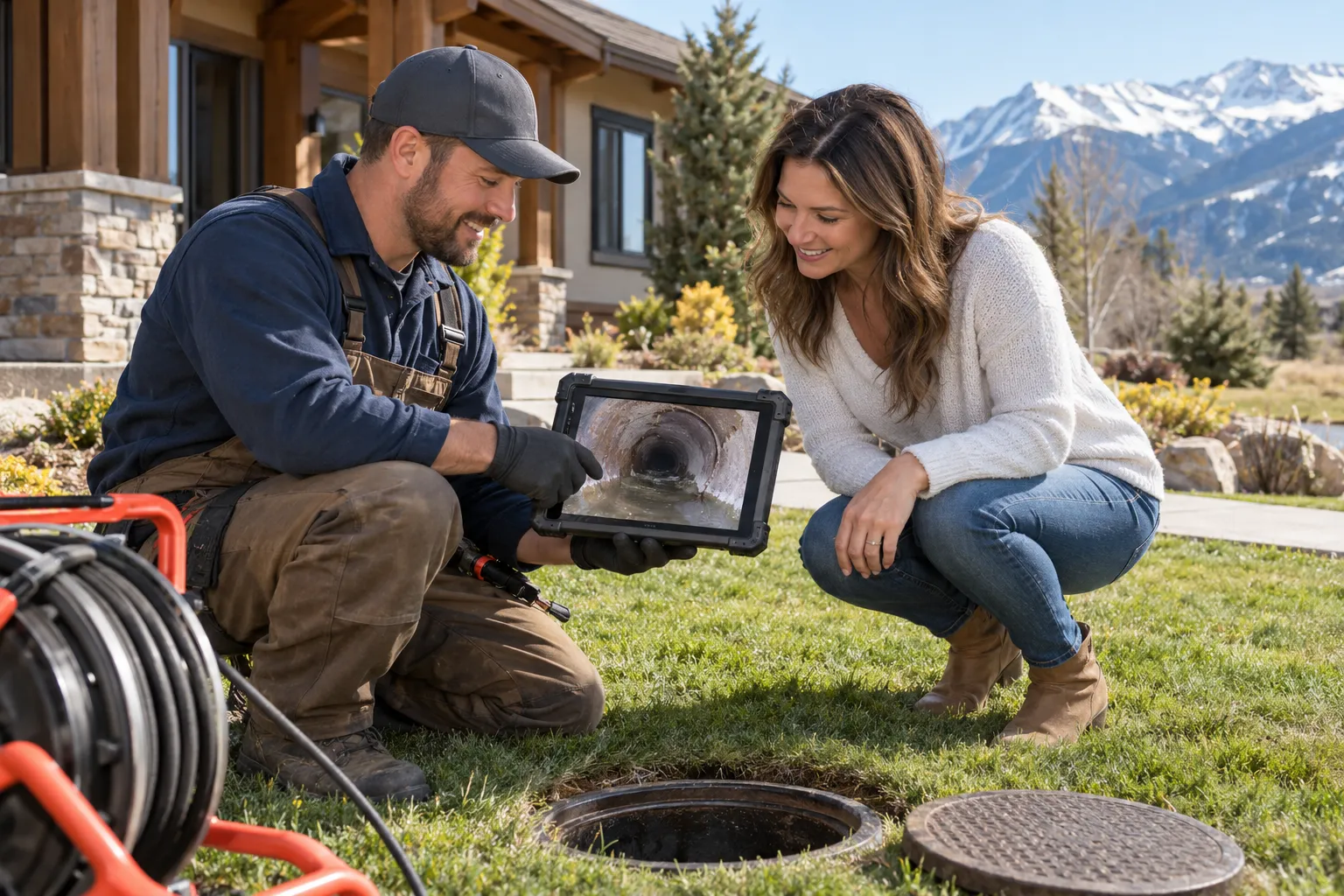
Good providers do not guess. They push a small camera down the line. It shows roots, cracks, breaks and sags on video.
They may also use a locator to mark the depth and path above ground. Often they clear the blockage first with emergency drain clearing, then inspect. That gives a clear view of the damage.
The right fix depends on what the camera shows. Ask the provider why they picked it.
If only one section is broken, a provider may dig and replace just that piece. It is a smaller job with less yard damage.
A resin liner is pulled into the old pipe and hardens in place. It needs little digging. It works when the pipe is cracked but still in shape.
A new pipe pulls through the old one and breaks it apart as it goes. It also needs limited digging.
If the pipe has collapsed or sags badly, open trench replacement may be the right answer. It costs more, but it fixes the line for good reasons, not guesses.
Many areas require a permit for sewer work. Ask the provider who pulls it. An inspection may follow.
Know where your part of the line ends. In many places the homeowner owns the pipe up to the main in the street. Some cities own part of it. Check with your local utility before work starts.
A sewer repair done right protects floors, walls and the foundation. It also matters at resale. Buyers often order a sewer camera inspection.
Keep the invoice, permit and camera video. Together they show the line was fixed and checked.
After the repair, keep the line healthy. Flush only toilet paper. Keep grease out of drains. Do not plant thirsty trees near the line.
Schedule a camera check every year or two if your line is older or has had roots. Ask about a cleanout access point if you lack one. It makes future blocked pipe services faster and simpler.
Some policies may cover sudden damage. Check your policy. Providers can often help document damage for a claim.
A video look inside the line shows roots, cracks and sags before anyone digs.
Providers clear the line so sewage stops backing up and the damage can be seen.
Spot repair, lining, bursting or full replacement, based on what the camera shows.
You get the scope and price on paper before work starts, with no obligation.
Sewer costs vary a lot by depth, length, soil and method. These are typical U.S. ranges only. Your price depends on the job, so get a written quote before you agree to anything.
| Item | Typical range | Notes |
|---|---|---|
| Sewer camera inspection | $100 – $500 | Often done before any repair |
| Hydro-jetting or clearing | $250 – $800 | Clears roots and buildup |
| Cleanout installation | $1,000 – $4,000 | Gives future access to the line |
| Spot repair | $1,000 – $4,000 | One damaged section, depends on depth |
| Pipe lining | $3,000 – $10,000 | Less digging, price rises with length |
| Pipe bursting | $4,000 – $15,000 | Replaces pipe with limited trenching |
Stop using drains, keep people away from sewage and make the area as safe as you can.
Request a callback to check provider availability, or use the request form.
The provider inspects the line, often with a camera, and explains what they found.
Review the written quote, approve the repair, then follow a maintenance plan.
A proper repair protects your floors, walls and foundation from repeat damage.
Independent providers in your area know local soil, permits and what the weather does to pipes.
You see the findings, hear the choices and get a written quote before work starts.
Requesting an estimate carries no obligation, so you can compare before deciding.
Watch for several drains clogging at once, gurgling toilets, sewer smells, soggy yard patches or cracks in the slab. A provider can confirm it with a camera inspection of the line.
Sometimes. Pipe lining and pipe bursting need little digging and work for many homes. A badly collapsed or sagging pipe may still need a trench. The camera video shows which option fits.
It depends on your policy and the cause. Some policies may cover sudden damage, while wear and tree roots are often excluded. Check your policy, and ask the provider to help document the damage.
Burst pipe, backed-up drain or sewer trouble? Request a callback to check provider availability, or send a request and we will point you to a local provider.
No obligation